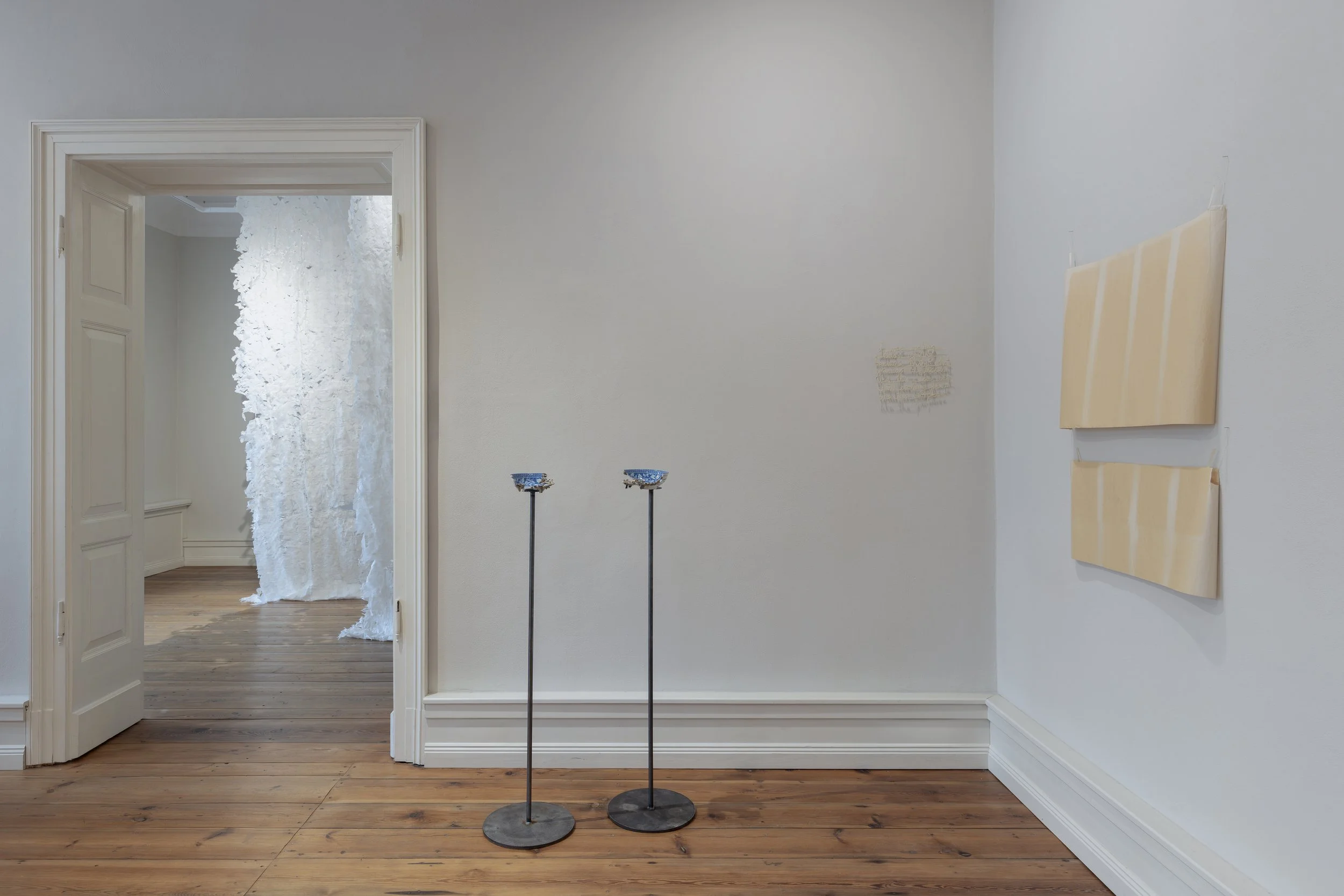
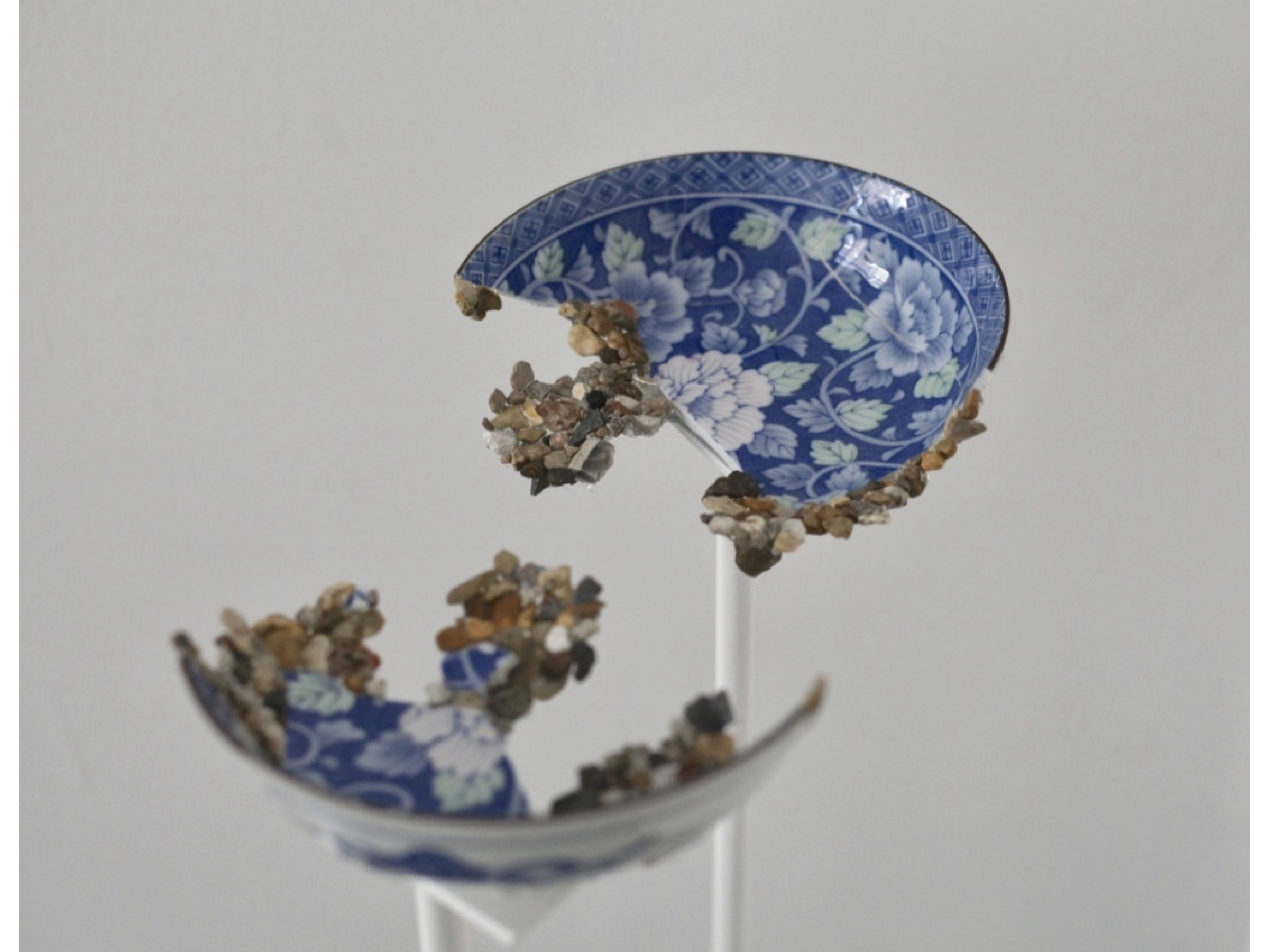
2019, broken china, gathered stones from around my home, coloured silicon, 40cm x 25cmGrandma’s Plates
Relics are both isolated fragments and objects of intimacy. Although pieces from the past, they hold a sentimental value in the present; in this way relics are carried forward. For several years I walked daily past the synagogue in Dresden. After the Dresden Synagogue was destroyed during Krystallnacht, the rubble remaining was only enough to make one brick in the wall which replaced it 70 years later; a somewhat fitting image for a culture which places stones rather than flowers by graves. In ‘Grandma’s Plates’ I have taken pieces of one aspect of my cultural background to find ways of mourning the relics we bring forwards, fixing with stones the pieces which are broken.
From harm comes recuperability. Human beings, like any other life form, will always strive to live. However something broken will never quite appear the same when put back together. Both human nervous systems and memory are conceived of as ‘inorganic recordings’ that people will often either try to decode or end up repeating. In a way, every human being reads like a compendium of cracks, which have, to varying degrees, been filled in or covered over. A common side effect of trauma is holes in memory. Grandma’s Plates mourns these gaps by using the visual language of tz’ror (memorial stones, bonds), to recreate healing scar tissue.
Photographed by Alicja Kielan at Galerie Op Enheim in Wrocław, and the artist at the Brixton Beneficiary